ਜਿਸ ਸਾਜ਼ ਨਾਲ ਅਸੀਂ ਰੋਜ਼ ਬੈਠਣਾ ਹੈ, ਉਸ ਨੂੰ ਚੰਗੀ ਤਰ੍ਹਾਂ ਜਾਣ ਲਈਏ: ਇਹ ਕਿਵੇਂ ਬਣਿਆ, ਕਿਵੇਂ ਕੰਮ ਕਰਦਾ ਹੈ ਅਤੇ ਇਸ ਦੀ ਸੰਭਾਲ ਕਿਵੇਂ ਕਰਨੀ ਹੈ।
Let us get to know the instrument we will sit with every day: where it came from, how it works and how to look after it.
ਥੋੜ੍ਹਾ ਇਤਿਹਾਸA little history
ਹਾਰਮੋਨੀਅਮ ਯੂਰਪ ਵਿੱਚ ਪੈਰਾਂ ਨਾਲ ਚੱਲਣ ਵਾਲੇ ਰੀਡ ਆਰਗਨ ਤੋਂ ਨਿਕਲਿਆ। ਉਨ੍ਹੀਵੀਂ ਸਦੀ ਦੇ ਅਖ਼ੀਰ ਵਿੱਚ ਕਲਕੱਤੇ ਵਿੱਚ ਇਸ ਨੂੰ ਹੱਥ ਨਾਲ ਹਵਾ ਭਰਨ ਵਾਲਾ ਅਤੇ ਜ਼ਮੀਨ ਉੱਤੇ ਬੈਠ ਕੇ ਵਜਾਉਣ ਵਾਲਾ ਬਣਾਇਆ ਗਿਆ। ਛੇਤੀ ਹੀ ਇਹ ਸਾਰੇ ਭਾਰਤ ਵਿੱਚ ਫੈਲ ਗਿਆ, ਕਿਉਂਕਿ ਇਹ ਸਿੱਖਣ ਵਿੱਚ ਸੌਖਾ ਹੈ ਅਤੇ ਹਮੇਸ਼ਾ ਸੁਰ ਵਿੱਚ ਰਹਿੰਦਾ ਹੈ।
The harmonium grew out of the European foot-pumped reed organ. In the late nineteenth century, in Calcutta, it was redesigned to be pumped by hand and played while sitting on the floor. It soon spread across India because it is easy to learn and always stays in tune.
ਸਿੱਖ ਕੀਰਤਨ ਵਿੱਚ ਪਹਿਲਾਂ ਤੰਤੀ ਸਾਜ਼ — ਰਬਾਬ, ਸਰੰਦਾ, ਤਾਊਸ, ਦਿਲਰੁਬਾ — ਵਜਾਏ ਜਾਂਦੇ ਸਨ। ਵੀਹਵੀਂ ਸਦੀ ਵਿੱਚ ਹਾਰਮੋਨੀਅਮ ਆਮ ਹੋ ਗਿਆ। ਅੱਜ ਵੀ ਤੰਤੀ ਸਾਜ਼ਾਂ ਦੀ ਪਰੰਪਰਾ ਮੁੜ ਜਗਾਉਣ ਦੇ ਯਤਨ ਹੋ ਰਹੇ ਹਨ। ਹਾਰਮੋਨੀਅਮ ਸਿੱਖਣਾ ਇਸ ਸਫ਼ਰ ਦੀ ਚੰਗੀ ਸ਼ੁਰੂਆਤ ਹੈ।
Sikh kirtan was first played on string instruments — rabab, saranda, taus and dilruba. In the twentieth century the harmonium became common. Today there are efforts to revive the string tradition too. Learning the harmonium is a good start on this journey.
ਹਾਰਮੋਨੀਅਮ ਦੇ ਹਿੱਸੇParts of the harmonium
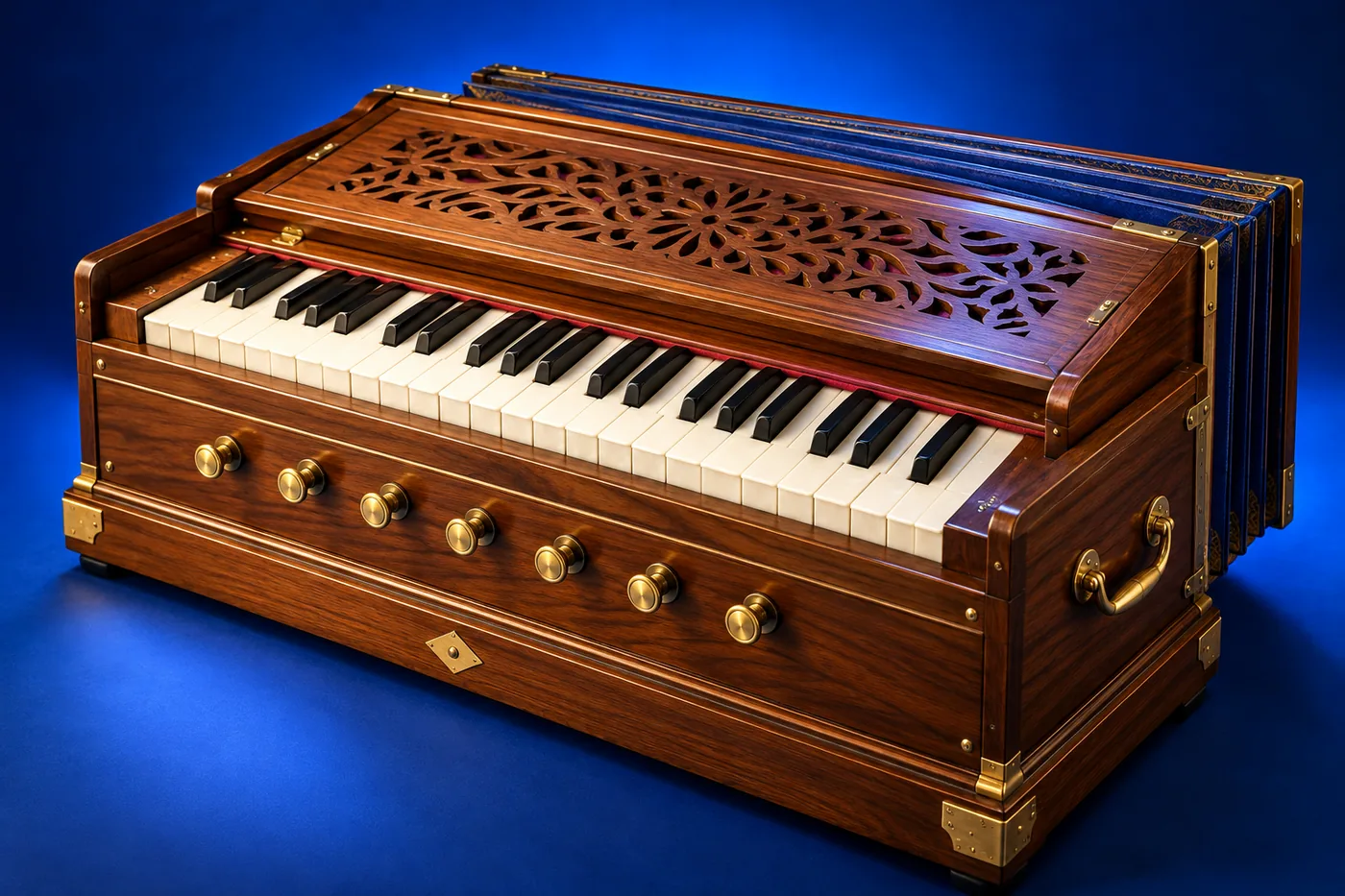
- 1ਧੌਂਕਣੀ Bellows
ਖੱਬੇ ਹੱਥ ਨਾਲ ਹਵਾ ਭਰੀ ਜਾਂਦੀ ਹੈ
pumped with the left hand to fill air
- 2ਸਟਾਪ (ਡੱਟੇ) Stops (knobs)
ਹਵਾ ਨੂੰ ਰੀਡਾਂ ਤੱਕ ਜਾਣ ਦਿੰਦੇ ਹਨ
open the air to the reeds
- 3ਡਰੋਨ ਸਟਾਪ Drone stops
ਇੱਕ ਸੁਰ ਲਗਾਤਾਰ ਵਜਾਉਂਦੇ ਹਨ
sound one note continuously
- 4ਕੀਆਂ (ਪੜਦੇ) Keys
ਚਿੱਟੀਆਂ ਅਤੇ ਕਾਲੀਆਂ
white and black
- 5ਕਪਲਰ Coupler
ਨਾਲ ਦਾ ਸਪਤਕ ਵੀ ਵਜਾਉਂਦਾ ਹੈ (ਹਰ ਹਾਰਮੋਨੀਅਮ ਵਿੱਚ ਨਹੀਂ)
sounds the next octave too (not on every harmonium) · not seen in the photo
- 6ਸਕੇਲ ਚੇਂਜਰ Scale changer
ਸਾਰੀਆਂ ਕੀਆਂ ਦੀ ਸੁਰ ਬਦਲਦਾ ਹੈ (ਕੁਝ ਹਾਰਮੋਨੀਅਮਾਂ ਵਿੱਚ)
shifts the pitch of all keys (on some harmoniums) · not seen in the photo
- 7ਆਵਾਜ਼ ਵਾਲੀ ਜਾਲੀ Sound grille
ਇੱਥੋਂ ਆਵਾਜ਼ ਬਾਹਰ ਆਉਂਦੀ ਹੈ
the sound comes out here
ਰੀਡਾਂ ਦੀਆਂ ਕਿਸਮਾਂReed sets
ਹਰ ਕੀ ਦੇ ਹੇਠਾਂ ਪਿੱਤਲ ਦੀ ਪੱਤੀ (ਰੀਡ) ਹੁੰਦੀ ਹੈ, ਜੋ ਹਵਾ ਨਾਲ ਕੰਬ ਕੇ ਆਵਾਜ਼ ਕੱਢਦੀ ਹੈ। "ਸਿੰਗਲ ਰੀਡ" ਵਿੱਚ ਹਰ ਕੀ ਲਈ ਇੱਕ ਰੀਡ, "ਡਬਲ ਰੀਡ" ਵਿੱਚ ਦੋ ਅਤੇ "ਟ੍ਰਿਪਲ ਰੀਡ" ਵਿੱਚ ਤਿੰਨ ਹੁੰਦੀਆਂ ਹਨ। ਵੱਧ ਰੀਡਾਂ ਨਾਲ ਆਵਾਜ਼ ਭਰਵੀਂ ਹੁੰਦੀ ਹੈ। ਕੀਰਤਨ ਲਈ ਡਬਲ ਰੀਡ ਵਾਲਾ, ਤਿੰਨ ਸਪਤਕਾਂ (੩੭ ਤੋਂ ੪੨ ਕੀਆਂ) ਵਾਲਾ ਹਾਰਮੋਨੀਅਮ ਸਭ ਤੋਂ ਵਧੀਆ ਹੈ।
Under every key is a brass tongue (reed) that vibrates in the air stream to make sound. A "single reed" harmonium has one reed per key, a "double reed" two and a "triple reed" three. More reeds give a fuller sound. For kirtan, a double-reed harmonium with three octaves (37 to 42 keys) is the best choice.
- ਹਰ ਕੀ ਦਬਾ ਕੇ ਸੁਣੋ: ਕੋਈ ਕੀ ਫਸਦੀ ਜਾਂ ਸੀਟੀ ਨਾ ਮਾਰੇ।
- ਧੌਂਕਣੀ ਬੰਦ ਕਰ ਕੇ ਦਬਾਓ: ਹਵਾ ਛੇਤੀ ਨਾ ਨਿਕਲੇ।
- ਸਾ ਅਤੇ ਤਾਰ ਸਾ ਇਕੱਠੇ ਵਜਾਓ: ਆਵਾਜ਼ ਮਿੱਠੀ ਅਤੇ ਸਾਫ਼ ਹੋਵੇ।
- ਜੇ ਹੋ ਸਕੇ ਤਾਂ ਕਿਸੇ ਤਜਰਬੇਕਾਰ ਵਾਦਕ ਨੂੰ ਨਾਲ ਲੈ ਜਾਓ।
- Press every key: none should stick or whistle.
- Close the bellows and press: air should not leak out quickly.
- Play Sa and upper Sa together: the sound should be sweet and clean.
- If possible, take an experienced player with you.
ਸੰਭਾਲCare
- ਵਜਾਉਣ ਤੋਂ ਬਾਅਦ ਸਾਰੇ ਸਟਾਪ ਬੰਦ ਕਰੋ ਅਤੇ ਧੌਂਕਣੀ ਦੀ ਕੁੰਡੀ ਲਾਓ।
- ਕੱਪੜੇ ਨਾਲ ਢੱਕ ਕੇ ਰੱਖੋ ਤਾਂ ਜੋ ਮਿੱਟੀ ਅੰਦਰ ਨਾ ਜਾਵੇ — ਮਿੱਟੀ ਰੀਡਾਂ ਦੀ ਸਭ ਤੋਂ ਵੱਡੀ ਦੁਸ਼ਮਣ ਹੈ।
- ਧੁੱਪ, ਗੱਡੀ ਦੀ ਗਰਮੀ ਅਤੇ ਸਿੱਲ੍ਹ ਤੋਂ ਬਚਾਓ।
- ਕੀਆਂ ਉੱਤੇ ਕਦੇ ਕੋਈ ਚੀਜ਼ ਨਾ ਰੱਖੋ।
- ਕੁਝ ਸਾਲਾਂ ਬਾਅਦ ਕਿਸੇ ਕਾਰੀਗਰ ਤੋਂ ਟਿਊਨਿੰਗ ਅਤੇ ਸਫ਼ਾਈ ਕਰਵਾਓ।
- After playing, close all stops and fasten the bellows latch.
- Keep it covered with a cloth so dust does not get in — dust is the reeds' worst enemy.
- Protect it from sunlight, the heat of a car and damp.
- Never put anything on the keys.
- Every few years, have a craftsman tune and clean it.